
Key Points:
- Salt air, marine humidity, and strong UV exposure change how decking materials perform here, not just how they look over time.
- Wood options range from pressure-treated pine to cedar, redwood, and dense tropical hardwoods like ipe, each with a different durability and maintenance profile.
- Composite decking is not one product. Capped composite and PVC decking resist moisture and fading far better than older, uncapped composite.
- Standard galvanized hardware can fail faster than expected in salt air. Stainless steel fasteners cost more upfront but hold up longer near the coast.
- The lower-priced material today isn’t always the cheaper choice once you factor in maintenance over 15 to 20 years.
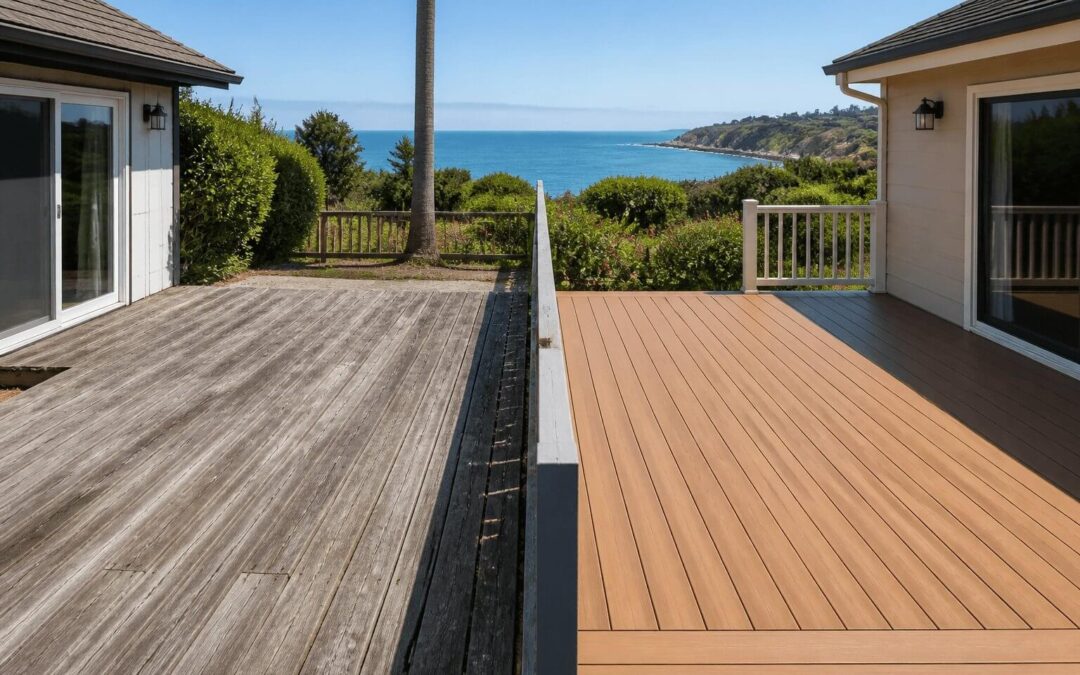
Two decks, same neighborhood, same year built. Five years later, one still looks freshly installed. The other is graying, splintering at the edges, and overdue for work nobody budgeted for. The difference usually traces back to one decision made before construction ever started: wood or composite decking.
Dubsi Construction’s Custom Deck Building guide already covers the basic version of this tradeoff: wood costs less upfront, composite costs more but asks less of you afterward. That much holds almost anywhere in the country. It just is not the whole story once salt air, marine humidity, and near-constant UV exposure enter the picture, and those three factors do more to a deck on the Santa Barbara coast than a generic buying guide would have you believe.
This guide goes further, covering the coastal-specific chapter that a generic guide leaves out.
Why Does This Decision Matter More on the Santa Barbara Coast?
Three conditions set this coastline apart from a typical inland climate. Salt-laden air corrodes exposed metal and dries out wood fiber faster than inland air does. Marine humidity keeps moisture sitting against decking surfaces longer than a dry climate ever would. UV exposure here is strong and consistent, breaking down surface fibers year-round rather than in a short summer window.
Worth noting, exposure is not identical everywhere in this service area either. A beachfront property in Montecito faces more direct salt exposure than a sheltered, inland lot in Goleta, so the right material can shift somewhat depending on exactly where you are, not just which city you live in.
What Are Your Actual Wood Decking Options?
Wood decking generally falls into three tiers:
- Pressure-treated pine, the entry point, affordable and a reasonable choice if you are genuinely willing to keep up with maintenance
- Cedar and redwood, natural rot and insect resistance, similar lifespans to each other, and wood that takes stain beautifully
- Tropical hardwood like ipe, dense enough to last decades rather than years, naturally resistant to rot and insects, and priced well above the rest of the category to match
Lumber grading for treated and untreated wood decking follows standards set by the American Wood Council, and pressure-treated products are regulated under EPA guidance for wood preservatives, worth knowing if you want a second source beyond a contractor’s recommendation.
What Are Your Actual Composite Decking Options?
Composite decking is not one product wearing different labels; it comes in three distinct categories with real performance differences. Traditional, uncapped composite blends wood fiber with plastic but leaves that core exposed, so it still absorbs moisture and fades over the years. Capped composite wraps that same core in a polymer shell on every side, which is why modern composite earns its low-maintenance reputation, often backed by manufacturer warranties in the 25 year range. PVC decking skips wood fiber entirely, making it the most moisture-resistant option in the category and, typically, the most expensive.
Material testing standards for composite and PVC decking are set by ASTM International, which is worth a look if you want to compare products beyond a manufacturer’s own marketing claims.
How Does Each Material Hold Up Against Salt Air, UV, and Moisture?
Wood fiber soaks up moisture and salt residue, which raises the grain, invites splintering, and speeds up rot the moment sealing falls behind schedule. UV exposure dries and grays exposed fibers over time no matter the species. Capped composite and PVC take a different path: with no organic fiber exposed, salt and moisture mostly shed off the surface instead of soaking in, and their embedded color resists fading better than stained wood ever will. Uncapped composite is the exception: with its core exposed, it behaves more like wood here than its label suggests.
What Hardware and Fasteners Actually Matter in a Coastal Climate?
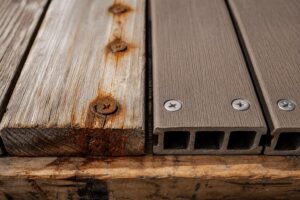
The decking material is only half the equation. Standard galvanized fasteners rely on a zinc coating that wears away with enough salt exposure, and once that coating is gone, the steel underneath starts corroding. 316 stainless steel costs more to start, but it resists that corrosion far better in marine environments, and its longer service life usually makes it the more economical choice over time, not just the safer one.
The North American Deck and Railing Association publishes hardware and railing standards worth reviewing if a contractor’s fastener choice ever needs a second opinion. While you are asking about hardware, ask about concealed fastener systems too. Hiding hardware beneath the deck surface rather than exposing screw heads to the weather is worth considering with either material.
How Do Footings and Drainage Affect How Long a Deck Lasts Here?
Footings do more than hold a deck up off the ground. Elevating the structure keeps wood framing dry and lets air circulate underneath, which helps prevent rot in a damp climate. Poor drainage around footings lets water pool at the base of support posts, a preventable cause of early structural trouble. Grading the site and planning drainage before construction begins matters just as much as whatever material ends up on top.
What Does Long-Term Maintenance Actually Look Like for Each Material?
Most wood decking wants resealing or restaining roughly every one to two years in this climate, toward the more frequent end of the usual range. Ipe breaks that pattern entirely. Oiling is optional and mostly about keeping its color, since its density keeps it structurally sound either way. Capped composite and PVC need little beyond a regular cleaning. Uncapped composite lands in between, asking for more attention than capped products but less than wood.
Which Material Actually Costs Less Over 15 to 20 Years?
The Custom Deck Building guide already covers upfront pricing by project size, so here is the bigger picture. Pressure-treated wood costs the least to install, but it typically needs a full replacement within that 15 to 20-year window, plus a dozen or more resealing cycles along the way. Capped composite costs more to start, but a single installation often covers that same span with nothing more than routine cleaning. Run the full math and the gap narrows considerably, sometimes landing in a similar total range despite the different sticker price on day one. IPE adds a third path: a steep upfront cost that can still work out cheaper than repeated pressure-treated rebuilds, since one well-installed IPE deck can outlast several of them.
There is no single right answer, only the tradeoff that fits your budget and how much upkeep you actually want to take on.
Real World Examples
Picture two nearly identical homes, built the same year. One got a pressure-treated wood deck, the other capped composite. Five years in, the wood deck has already been resealed twice, work that starts adding up against the composite deck’s higher day-one price, while the composite deck has needed nothing more than a hose and a broom.
In another case, a homeowner chose standard galvanized screws to save money on a deck close to the water. Within a couple of years, rust stains had bled through the decking around several fastener heads, a repair stainless steel hardware would have prevented, one that quietly erased whatever the galvanized screws had saved.
These are illustrative examples, not specific past clients, but the pattern shows up constantly in this market.
Expert Tips
A few smaller questions are worth asking before you sign, on top of everything above.
Ask whether a composite product is capped or uncapped before comparing prices. That distinction matters more than the brand name on the box.
Ask to see the actual fastener specification in writing, not just a verbal assurance that quality hardware is included.
Ask how footing depth and drainage were determined for your specific lot, rather than copied from a standard plan.
Ask for a realistic maintenance schedule for the exact wood species you are quoted. Sealing needs vary more than most homeowners expect.
Conclusion and Next Steps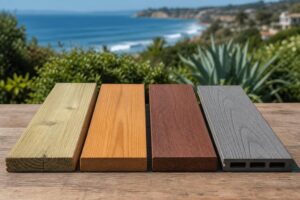
Strip away the marketing, and this decision comes down to how much upkeep you actually want to take on, not which material is objectively better. Wood costs less to start and asks more of you as the years go on. Composite, especially capped composite, costs more upfront and asks very little afterward. Ipe sits apart from both, expensive going in but built to outlast either standard option.
Dubsi Construction installs both wood and composite decking across Goleta, Santa Barbara, and Montecito, so consider this comparison a straight answer rather than a nudge toward whichever material we would rather sell you. If you want to talk through what actually makes sense for your project, call us at 805 637 6127 or request a free, no-obligation quote through our deck design and installation page. And if you have not read it yet, our Custom Deck Building guide covers layout, permitting, and cost ranges in more depth.
Frequently Asked Questions
Is composite decking really better than wood in a coastal climate?
Not universally. Capped composite and PVC decking resist salt, moisture, and fading better with less maintenance, but wood, especially cedar, redwood, or ipe, can perform very well too if it is properly sealed and maintained on schedule.
What is capped composite decking?
Capped composite has a polymer shell wrapped around the entire board, sealing the wood fiber core from moisture, UV, and staining. This is different from older, uncapped composite, which leaves that core exposed and more vulnerable to the elements.
Do I need special hardware for a deck near the ocean?
Yes, standard galvanized fasteners can corrode faster in salt air once their zinc coating wears down. Stainless steel, particularly 316 grade, holds up significantly better in coastal conditions.
How much does salt air actually damage a wood deck over time?
Salt residue combined with moisture can raise wood grain, encourage splintering, and speed up rot if the deck is not resealed on a regular schedule. Consistent maintenance largely offsets this risk.
Which lasts longer, redwood or composite decking?
Redwood and cedar have similar lifespans to each other and can last many years with regular maintenance. Capped composite generally requires less upkeep to reach a comparable or longer lifespan, though ipe hardwood can outlast both with minimal care.
What is the best decking material for a house near the coast?
There is no single best answer. It depends on how much maintenance you want to take on. Composite and PVC minimize upkeep, while wood costs less upfront and rewards regular care with real longevity.
Does composite decking get hot in direct sun?
Composite decking can get warmer underfoot than wood in direct, intense sun, particularly with darker colors. This is worth considering for decks with little shade during peak afternoon hours.
How often should a wood deck be sealed or stained in a coastal climate?
Most wood decking benefits from resealing roughly every one to two years in this climate, on the more frequent end of the typical range, due to consistent UV and moisture exposure. Ipe is an exception, since oiling is optional and mainly affects appearance rather than durability.
Can composite decking develop mold or mildew?
Uncapped composite can, since its exposed core absorbs moisture similarly to wood. Capped composite and PVC decking resist this far better, since their sealed surface does not give mold and mildew the organic material they need to grow.
Is a tropical hardwood like ipe worth the extra cost for a coastal deck?
For homeowners who want long term durability with minimal maintenance, often yes. Ipe’s density and natural resistance to rot and insects can allow one installation to outlast several pressure treated rebuilds, which can make it more cost effective over decades despite the higher upfront price.